
Weddings
My Approach
A little about who I am and how I work.
Why Jonathan McPhail Photography?
Finding a wedding photographer is easy. Finding one you actually click with is the harder job, and the one that matters. A stiff, uncomfortable pairing shows up in the pictures whether either of you means it to. Here is who I am and how I work, so you can tell early whether we're a match.
Who Am I?
My job is to make the two of you, and everyone around you, forget the camera is there. That takes patience more than gear: staying calm when a wedding day goes sideways, which it always does a little, and reading a room instead of running it. I've been doing this long enough to trust my eye without thinking about the technical side, which frees me up to actually watch what's happening in front of me.
What I love shooting is anything fueled by love, in whatever form that takes: two people, a family, the natural world, a plate of food someone clearly cared about. A wedding is the clearest version of that, and being trusted with it is not something I take lightly.
How I Prep For a Wedding
Visiting the venue. Venue visits happen in advance whenever I can manage it: where the light falls at different hours, where a portrait session actually works, what gear the space demands. That's the difference between improvising on the day and already knowing the shot.
Meeting the coordinator. A good working relationship with the venue's events coordinator, built before the wedding day, makes everything on the day smoother. Nobody's meeting for the first time under pressure.
The shot list. A wedding day is chaotic by nature, so a full wishlist guarantee isn't realistic. What is realistic: building a real shot list together, so the moments that matter most have the best odds of being caught. That list lives in the Bride and Groom Checklist, once we've got a verbal agreement in place.
How I Shoot a Wedding
Early setup. Getting to the venue early, before anything starts, means equipment and power sources are sorted well ahead of time. A wedding day throws spontaneous moments at you constantly, and being set up in advance is what lets me actually catch them instead of scrambling.
An assistant, always. Every package includes one. They carry gear, hold lighting, and cover angles I physically can't be in two places to shoot myself. Without one, the work suffers, plainly.
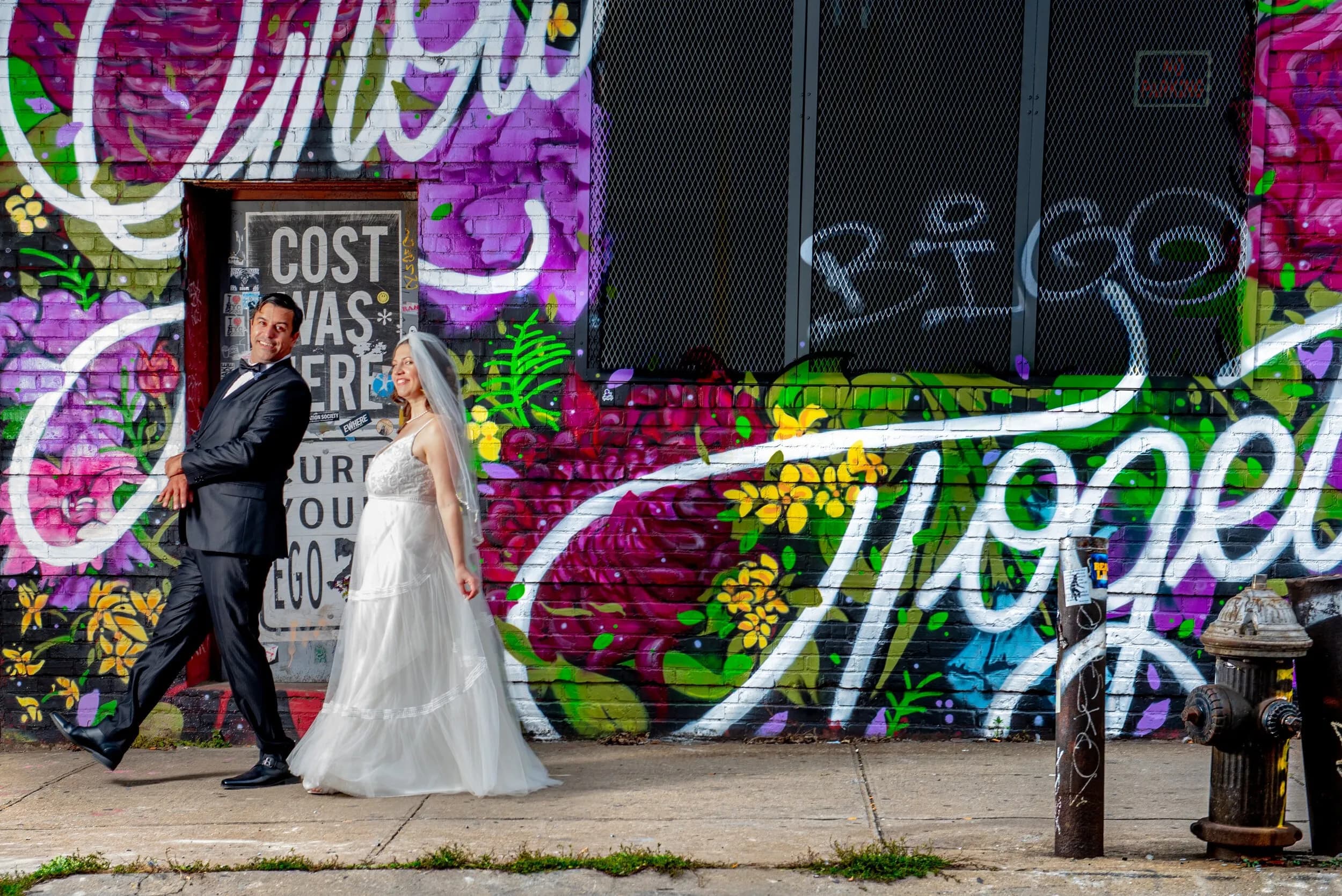
Candid over posed. The posed photographs are the smallest part of the day. Most of what you'll keep is candid: the look between you before anyone's said anything, a face during the speeches, the friend at the back of the room who can't stop laughing. Those frames can't be arranged, and asking for them again never works, so my job is to be in position and out of the way before they happen rather than reacting once they have.
In practice that means staying close enough to see properly, quiet enough to be forgotten. I read the room rather than direct it, watch for what's building instead of what's already happened, and keep shooting through the parts most people assume are over, which is usually where the best of it is.
Light, not flash. No on-camera flash, ever. Everything is shot with off-camera flash, studio strobes, or ambient light when it's already right. It's the only way to get the look you see in the work.